

Index
- Why does color fade from fabrics?
- How to fix the color of clothes with vinegar
- Practical tips for washing colored clothes
- Professional fixatives to prevent color from fading
- The best color-catching sheets to protect your clothes
- Long-term maintenance to keep colors vibrant
- Frequently Asked Questions
Last updated: August 10, 2026
Why does color fade from fabrics?
Fabrics bleed because the dye molecules aren't fully bonded to the fibers during the initial dyeing process. When garments are washed, water penetrates the fibers and gradually dissolves the unbonded dye, carrying it away during the rinse cycle. This phenomenon, known as dye transfer , is particularly common with natural fabrics like cotton, linen, and silk, which have a more porous fiber structure than synthetics.
Color fastness depends on several factors. Water temperature plays a crucial role: hot water expands textile fibers, creating larger spaces through which the dye can migrate and disperse. The quality of the dye used during production also plays a significant role. Cheap synthetic dyes, often used in fast fashion, have lower color saturation and bind poorly to the fibers.
Another important factor is the pH balance of the wash water. L with a high pH (alkaline) tends to cause more color migration than neutral water. Harsh detergents and high concentrations of detergent can also strip dye from the fibers, accelerating the fading process.
The number of washes and drying method also affect colorfastness. Garments tumble-dried at high temperatures are more stressed than those air-dried, which contributes to faster color loss over time.
How to fix the color of clothes with vinegar
Color-setting with vinegar is one of the most accessible and environmentally friendly methods for preventing color bleeding. L acetic acid in vinegar lowers the pH of the water, creating an environment less favorable for color transfer. This process partially seals the dye into the textile fibers, significantly reducing fading during subsequent washes.
The process is simple and requires just a few ingredients. For recently dyed or particularly fade-prone garments, soak the item in a solution of one part white vinegar and three parts cold water. Let the fabric soak for 30-60 minutes. Cold L is essential because it doesn't swell the fibers like hot water would, allowing the acid to act without causing further expansion .
After soaking, rinse the garment with cold water until the vinegar smell is completely gone. This step is important because it removes excess acid without compromising the setting effect. For cotton or linen garments , you can add half a cup of white vinegar directly to the rinse cycle of the washing machine during the first few washes.
Tip: Distilled white L works better than apple cider vinegar or wine vinegar, which contain added pigments that could stain light-colored items. Make sure to use vinegar with at least 5% acetic acid.
A significant advantage of vinegar is that it is completely natural and biodegradable, making it an excellent choice for those who are environmentally conscious. Unlike commercial chemical fixatives , vinegar does not leave toxic residues on the garment or significantly pollute wastewater.
However, vinegar alone isn't a permanent solution. It's more effective as a preventative treatment immediately after dyeing rather than as a remedy for already faded items. For best results, combine vinegar treatment with proper washing and drying practices.
Practical tips for washing colored clothes
Water temperature and wash cycle
Water temperature is perhaps the most important factor in preventing color bleeding from garments. Cold L (below 30°C) is ideal for colored garments because it doesn't swell the fabric fibers, thus reducing the chance of the dye dissolving and running out during rinsing .
Many consumers think that warm water is an acceptable compromise, but fabric care research shows that even moderate temperatures cause measurable color loss. For new or heavily colored garments, the first wash should be done in cold water. Subsequent washes can be done at slightly higher temperatures, but never above 30°C.
The wash cycle you choose also affects colorfastness. Delicate or hand wash cycles are preferable to regular cycles because they subject the fabric to less agitation, reducing mechanical stress on the fibers and limiting dye extraction. A long, aggressive cycle can cause more damage than a short, gentle cycle.
Separation of garments by color
Separating clothes is a fundamental practice that many people overlook. Separating clothes by color isn't just a matter of aesthetics: it's a way to prevent color transfer from one item to another during the wash.
Red, dark blue, and black garments should always be washed separately from light-colored items. New, brightly colored items should be washed alone for at least the first three washes, as they are more prone to dye loss. Even within the same color category, it's helpful to separate new items from those that have been washed multiple times.
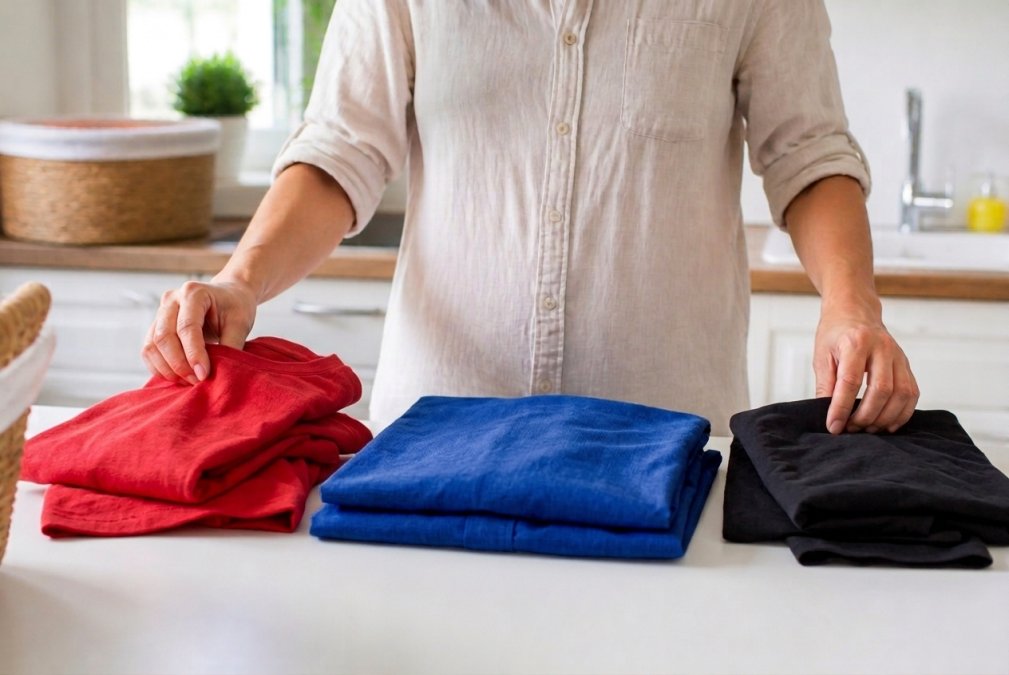
When washing similarly colored items together, the color saturation has already been partially removed from older items, so the risk of color transfer is lower. However, if you have any doubts about the colorfastness of a garment, the colorfastness test is simple: wet a corner of the fabric with cold water and press it against a white cloth. If the color transfers, that item should be washed separately.
The washing machine load also affects color separation. An overfilled load prevents the water from circulating evenly, increasing the risk of dye buildup on some garments. Fill the washing machine only three-quarters full to allow adequate water circulation.
Professional fixatives to prevent color from fading
Professional fixatives are specifically formulated to seal dye molecules into textile fibers, offering much longer-lasting protection than natural remedies like vinegar. These products work by altering the chemical structure of the fiber or creating a molecular bond between the dye and the fabric.
Aybel's Fiske Fixing Agent L a professional fixative designed for both machine and hand washing. This type of fixative is particularly useful for garments recently dyed with Aybel dyes, ensuring the color remains vibrant and stable for many more washes. The product works by creating a protective barrier that significantly reduces color migration during subsequent washes.
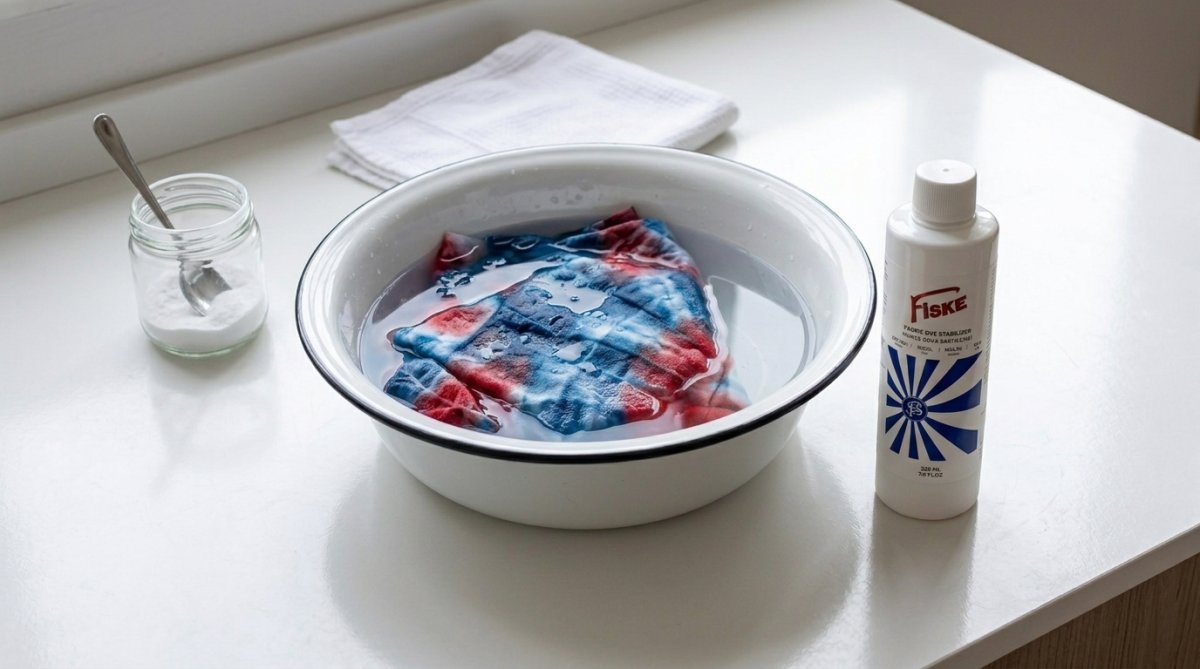
L is simple: after the initial wash of the dyed garment, add the fixative according to the instructions provided. Generally, the product is diluted in warm water and the garment is soaked for the indicated time. This process is particularly effective for natural fabrics like cotton, linen, and silk, which have a porous fibrous structure and tend to hold chemical fixatives better.
Professional fixatives also offer a significant environmental benefit: by allowing garments to last longer without fading, they reduce the need to frequently purchase new items. For those who are conscious of textile sustainability, investing in a good fixative is a way to combat fast fashion and extend the lifespan of their garments.
Unlike natural remedies, professional fixatives are formulated to provide long-lasting protection. While vinegar works primarily on the first wash, chemical fixatives create a lasting effect that protects the garment for dozens of washes. For valuable or especially loved garments, this extra protection is worth the investment.
The best color-catching sheets to protect your clothes
Color-catching sheets are a practical and convenient addition to your laundry routine, especially when perfect color separation isn't possible. These sheets capture loose dye molecules that disperse in the water during the wash cycle, preventing them from settling on other garments.
These products work by absorbing the dye released during the rinse and spin cycles. They're especially useful when washing different colors together or when you have a new garment that might still bleed dye. Adding one or two sheets to a medium-sized washer load is usually sufficient.
However, it's important to note that color-catching sheets are not a substitute for good color separation practices. They are a supplemental measure, not a complete solution. For new or colored garments, separation remains the most effective method for preventing color transfer .
When choosing color-catching sheets, look for products specifically formulated for your type of load. Some are designed for cold water, others for warm water. Always read the instructions and make sure the product is compatible with your fabric type and detergent.
Long-term maintenance to keep colors vibrant
Maintaining vibrant colors over time requires a long-term care strategy that goes beyond the first wash. The practices you adopt in the months and years after purchasing a garment determine how well the color will last.
One of the most important practices is to reduce the frequency of washing. Many garments don't need to be washed after every single use. A pair of jeans, for example, can be worn several times before needing a wash. The less often you wash a garment, the less opportunity the dye has to bleed. When the garment isn't visibly soiled, consider airing it out instead of washing it.
When washing, continue using cold water even after the first few washes. L habit of using cold water should become permanent for colored garments, not just an initial practice. This single practice can significantly increase the longevity of the color.
L is equally important. Tumble L at high temperatures causes thermal stress that accelerates fading. Air-drying garments, preferably out of direct sunlight, is the best way to preserve their color. If you must use the dryer, select the low-heat or "delicate" cycle.
Garment storage also affects colorfastness over time. Garments should be stored in a cool, dry place, away from direct sunlight. Prolonged L to ultraviolet light causes fading even without washing. If you have a closet exposed to sunlight, consider using curtains or rearranging the space to protect your most valuable items.
For garments that are starting to fade, an occasional touch-up with Aybel dyes can restore their original colors. Many consumers don't realize that it's possible to re-dye a faded garment rather than discard it. This approach is consistent with the philosophy of sustainability and reuse, transforming an old garment into one that looks new again.
Maintaining the vibrant colors of your favorite garments doesn't just require the first treatment: it's an ongoing process that begins with proper washing and drying habits. If you're looking to extend the life of your garments and keep them looking new, investing in a professional fixative like Fiske Fixative is worth every penny. With the right fixative and proper care, your colored garments will stay vibrant for years, reducing the need for new clothing and contributing to more sustainable fashion.
Frequently Asked Questions
How can I prevent color bleeding from my new clothes?
The first step is to wash new garments separately in cold water with a gentle detergent. Use a professional fixative like Aybel Fiske ($4.99) in the first wash to seal the color into the fibers. Avoid the dryer for the first few washes and hang them to air dry. These measures significantly reduce color transfer in subsequent washes.
Does salt and vinegar really work to set color?
Yes, both have fixing properties. L lowers the pH of the water, helping the fibers hold the color better. Add a cup of white vinegar to the final rinse. The salt (sodium chloride) slightly expands the fibers, allowing the color to penetrate more deeply. However, professional fixatives like Aybel Fiske offer more consistent and long-lasting results than natural methods alone.
What are the best color-catching sheets to use in the washing machine?
Color-catching sheets are useful for capturing loose dyes during washing, especially when washing mixed-color garments. Choose quality products that won't leave residue on fabrics. However, they're no substitute for properly separating garments by color and using cold water. Combine them with professional fixatives and proper washing practices for maximum protection.
How should I wash colored clothes to keep them vibrant over time?
Always wash in cold water to prevent excessive fiber expansion. Separate light-colored items from dark and brightly colored ones. Use a moderate amount of mild detergent, as concentrated detergent can strip color. Hang to air dry whenever possible. For new or recently dyed items, apply a fixative like Aybel Fiske in the first one or two washes for best results.
This article was written using GrandRanker