

Index
- Preparing the fabric before dyeing
- Choosing the right dye concentration for saturation
- How to dye cotton in the washing machine for even results
- Hand dyeing: a step-by-step guide
- Fabric color fixer: the essential step
- Drying, ironing and post-dyeing care
- Overdyeing and reviving faded colors
- Frequently Asked Questions
Last updated: August 30, 2026
Preparing the fabric before dyeing
Preparation is the foundation of any successful dyeing project. Many beginners skip this step and end up with disappointing results: uneven, faded colors, or colors that don't adhere evenly to the fabric.
Start by washing the fabric thoroughly with hot water and a degreasing detergent. This removes finishing agents, manufacturing residues, and contaminants that prevent the dye from penetrating the fibers properly. Let the fabric soak for 15-20 minutes, then rinse thoroughly until the water runs completely clear.
The fabric must be wet when entering the dye bath. If it's dry, the dye water has difficulty penetrating, resulting in areas of deeper color next to lighter ones. For natural fabrics like cotton, wool, and silk, inadequate preparation can lead to unpredictable results.
Choosing the right dye concentration for saturation
The dye concentration controls the intensity of the final color. Using too much dye doesn't make the color stronger; it just creates a dark, flat hue. Using too little, however, produces a pale, disappointing color.
Aybel provides clear instructions: a 10-gram sachet optimally dyes 250 grams of dry fabric. A 1:25 ratio (one part dye to 25 parts fabric) produces medium, natural colors. A 1:15 ratio produces more saturated, intense colors. The type of fiber affects how the dye binds: wool absorbs dye more quickly than cotton, so a slightly lower concentration may be required to avoid overly saturated colors.
Natural fibers vs. synthetic fibers
Aybel is formulated to work well on cotton, wool, silk, linen, viscose, bamboo, and polyamide (nylon). Synthetic fibers such as pure polyester do not absorb these dyes and will remain colorless.
Natural fibers have a porous structure that allows the dye to penetrate and bind to the fiber molecules. Wool has a protein structure that captures the dye very effectively, requiring less dye to achieve the same level of vibrancy than cotton. Cotton requires a higher dye concentration and higher temperatures to achieve complete saturation.
If your garment is a blend, the polyester will remain colorless or nearly so, while the cotton will absorb the dye. If you're dyeing a garment with polyester seams, those seams won't change color.
How to dye cotton in the washing machine for even results
Dyeing cotton in the washing machine is the fastest and least demanding method, perfect for those who want professional results without the manual labor.
Here's the process:
- Weigh the dry fabric to calculate the correct amount of dye.
- Place the wet fabric in the empty washing machine.
- Add the correct amount of Aybel food coloring according to the instructions on the package.
- Select a hot water cycle (at least 60 degrees Celsius). Higher temperatures result in better dye penetration and more vibrant colors.
- Use a long cycle of at least 40-50 minutes to ensure the dye has enough time to bind to the fibers.
The washing machine agitates the fabric continuously, ensuring even distribution of the dye.
Hand dyeing: a step-by-step guide
Hand dyeing offers maximum control over the process and produces consistent results when done correctly. It's the ideal method for delicate garments, small projects, or when you want to experiment with shades and creative techniques.
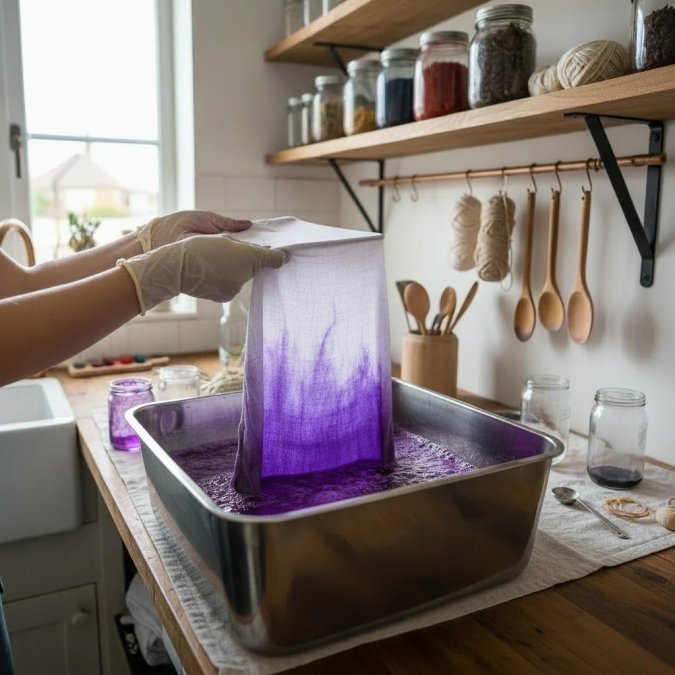
You'll need a large bowl (non-metallic, preferably stainless steel or plastic), hot water, Aybel dye, and a wet fabric. Here's how:
- Fill the basin with hot water.
- Dissolve the food coloring in a little warm water before adding it to the bowl to ensure even distribution.
- Add the wet fabric and immerse it completely.
- Stir the fabric every 5 minutes using a wooden spoon or sponge.
- Keep the temperature constant throughout the dyeing process.
The key to hand dyeing is patience and attention. Stir regularly to avoid leaving undyed areas. If the color isn't vibrant enough after the recommended time, you can soak for another 10-15 minutes.
Water temperature and immersion time
Temperature is critical because it controls the rate at which the dye penetrates and binds to the fibers.
For wool and wool blends, use water at 90°C for 40-50 minutes. For cotton, you can use water at 50, 60, or 90°C: lower temperatures produce softer colors, while 90°C produces the most vibrant colors. With 90°C, the time can be reduced to 30-40 minutes; with lower temperatures, extend it to 50-60 minutes. For silk, use water at 60-70°C for 20-30 minutes, as it is more delicate.
If the water cools during the process, the dye will bind more slowly and the final color will be less saturated. Use a thermometer to monitor the temperature and add hot water if necessary.
Avoid stains and uneven color
Stir regularly. Every 5 minutes, lift the fabric from the bottom of the bowl and stir the water around it.
Don't overload. Make sure the basin is large enough to hold the fabric completely submerged.
Use sufficient water. The general rule is to use at least 10 liters of water for every 500 grams of fabric.
Pre-wet the fabric. Make sure the fabric is completely wet before placing it in the dye.
Fabric color fixer: the essential step
The most important step to ensuring color lasts is using a color fixative . Without it, the color will fade quickly, especially after the first few washes.
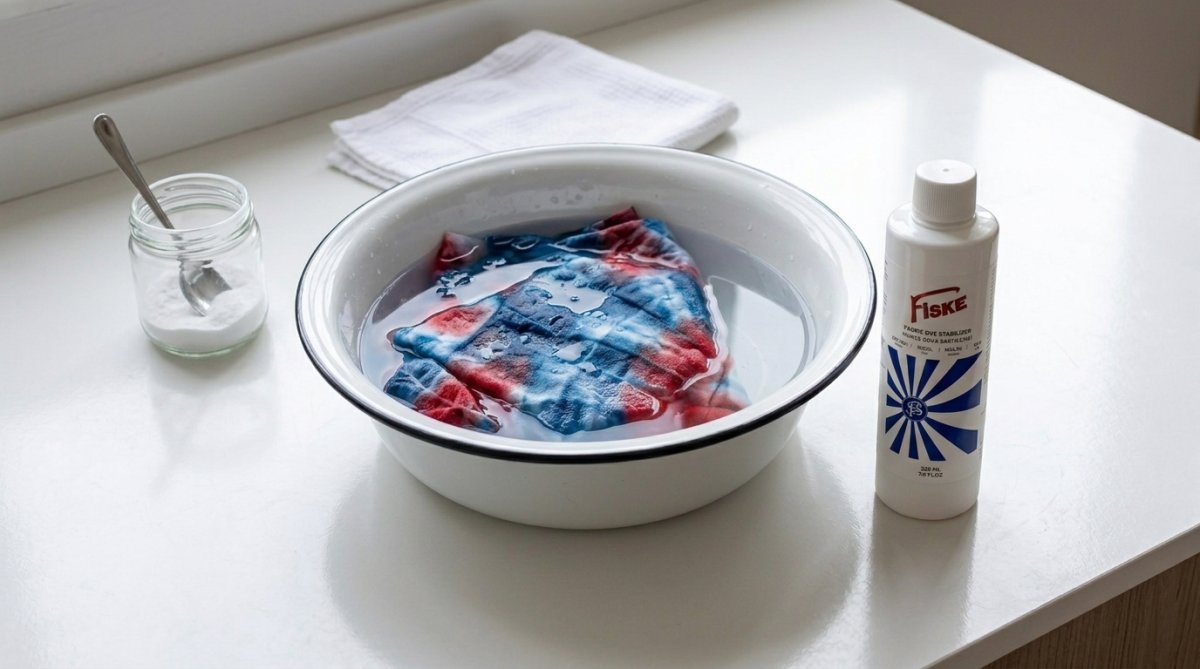
Aybel's Fiske Fixative L specially formulated to help dye bind more firmly to fabric fibers. It works by increasing the dye's adhesion to the fibers and protecting the color from wear caused by repeated washing and exposure to sunlight.
The fixative should be applied immediately after dyeing, while the fabric is still wet. If you're washing your fabric in a washing machine, you can add the fixative to the fabric softener compartment and run a cold rinse cycle. If you're hand-dying, soak the fabric in a fixative solution for 20-30 minutes.
To hand dye, prepare a basin of cold water and add 100 milliliters of Fiske Fixative for every 1-1.5 kilograms of dry fabric. Immerse the dyed fabric and stir every 5 minutes. After the recommended time, rinse the fabric with cold water until the water runs completely clear.
The fixative is especially important for garments that will be washed frequently or exposed to direct sunlight.
Drying, ironing and post-dyeing care
Once the fabric has been dyed and fixed, how you dry and store it affects the longevity of the color.
After the final rinse, gently squeeze the fabric to remove excess water. Don't wring it like you would a towel; this can damage the fibers. Use your hands to gently squeeze out the water, or wrap the fabric in a clean towel and press to absorb the moisture.
Air-dry the fabric, preferably laid flat on a clean surface or hung on a clothesline. Avoid direct sunlight while drying, especially during the first few days, as it can cause accelerated fading.
Don't tumble dry. High heat and agitation can damage the fibers and cause fading. If the fabric is still damp after air drying, you can iron it to speed up the process. Use a temperature appropriate for the fiber type and iron on the reverse side to protect the color.
Once dry, wash the garment in cold water with a mild detergent. Hot L causes more fading than cold water. Avoid bleach and harsh detergents.
Overdyeing and reviving faded colors
If you have a garment that has faded over time or whose color you no longer like, you can revive the color or change it completely by overdying, the practice of dyeing a fabric that has already been dyed previously.
L works by adding a new color over the existing one. The result is a combination of the two colors. For example, if you dye a blue garment with red, the result will be purple. This is important to understand before you begin.
To revive a faded color, use the same color as the original dye. Follow the same dyeing process, but reduce the soaking time by 30-40% because the fabric will absorb the dye more quickly. Check the color after 15-20 minutes and continue if necessary.
To completely change the color, choose a color that's darker than you want. Lighter colors won't completely cover the previous color. For example, if the garment is currently blue and you want to make it black, you can use Aybel's black .
The overdyeing process is identical to the initial dyeing process: prepare the fabric, select the concentration, use the right temperature, and apply the fixative at the end. L only difference is that the fabric will absorb the dye more quickly because the fibers have already been opened by the previous dyeing.
L is a great way to extend the life of your favorite garments and experiment with new colors without wasting fabric.
Ride |
Duration |
|---|---|
Fabric preparation |
20-30 minutes |
Hand dyeing |
30-50 minutes |
Dyeing in the washing machine |
40-50 minutes |
Fixative application |
20-30 minutes |
Drying |
4-24 ore |
Color revitalization |
15-30 minutes |
Achieving vibrant colors on fabrics isn't magic; it's a process. Start with the right preparation, choosing the right dye concentration, using the right temperature, and always applying a color fixative. These steps will transform a faded or dated garment into something that looks brand new.
Aybel makes this process accessible to everyone. With the full range of dyes and Fiske Fixing Agent , you can achieve professional results at home, extending the life of your favorite pieces and creating new shades that reflect your personal style.
Frequently Asked Questions
How can I avoid stains and uneven color when dyeing fabrics?
The key is thorough preparation and constant movement during dyeing. Clean the fabric thoroughly with dish soap before dyeing to remove residue that can cause stains. When hand dyeing, move the fabric every 2-3 minutes to ensure even distribution. If washing the machine, use the delicate cycle and make sure the fabric is not too compact in the drum. Aybel also recommends pre-wetting the fabric in warm water before adding the dye.
Is the fabric color fixative really necessary or can I skip this step?
Fixative is essential for maintaining vibrant colors over time. Without fixative, color fades quickly after just a few washes. Aybel's Fiske L ($4.99) creates a chemical bond between the pigment and the fibers, significantly increasing color longevity. Use it in the final hand rinse or in the fabric softener compartment of your washing machine. It's a minimal investment that protects your dyeing work.
Can I dye synthetic fabrics like polyester with Aybel dyes?
Aybel dyes work best on natural and semi-synthetic fibers such as cotton, wool, silk, linen, viscose, bamboo, and polyamide (nylon). Pure polyester is more difficult to dye with traditional dyes because it has a different molecular structure. If your garment is a cotton-polyester blend, the cotton will absorb the dye while the polyester will remain paler. For best results, check the fabric label before purchasing the dye.
How do I dye cotton in the washing machine without ruining the garment?
Place the wet fabric in the drum, loosely packing it. Add the dye to the main compartment and start the cycle. After washing, perform a final rinse by adding Fiske Fixing Agent (100 ml per 1-1.5 kg of fabric) to the fabric softener compartment. This method is quick and ensures even color distribution.